The phone rings about thirty hours after the crash. The voice is warm, unhurried, and genuinely pleasant. They ask how you are feeling before they ask anything else, and they mean it, more or less. Then they mention that they just need a quick recorded statement to get the file moving, and that it will only take a few minutes, and that everyone does this.
Everything in that sentence is true. It is also a job being performed extremely well. Insurance adjusters are trained professionals whose employer pays them to resolve claims for as little as the facts will allow, and the friendliest part of the call is not separate from that job. It is part of it. None of this means the person is dishonest. It means their interests and yours point in different directions, and the first week after a Colorado wreck is when that divergence costs people the most money. Here is what each early request actually does to your claim, and how to handle it without being difficult.

A recorded statement exists to lock your version of events in place while you still have a concussion, painkillers in your system, and no idea which parts of your body are actually injured. That is not cynicism. It is why the request comes early rather than in month three.
The questions sound casual and they are anything but. "Are you feeling okay today?" invites a polite "I'm fine," which becomes a quote about your condition. "How fast do you think you were going?" invites a guess, which becomes a speed estimate you can be cross examined on later. "Had you had anything to drink at all?" and "Were you running late?" are asked in the same friendly tone as everything else.
The distinction matters, and it is simple:
Declining politely works. A sentence along the lines of "I'm still being treated and I'd rather not give a statement until I know more" is complete, courteous, and closes the subject. You are permitted to confirm the basics, meaning the date, the location, the vehicles involved, and that you are receiving medical care, without narrating the collision.
A handful of ordinary phrases do outsized damage in Colorado claim files:
Saying "I don't know" is not evasive. It is accurate, and it is far safer than a number you invented under pressure.
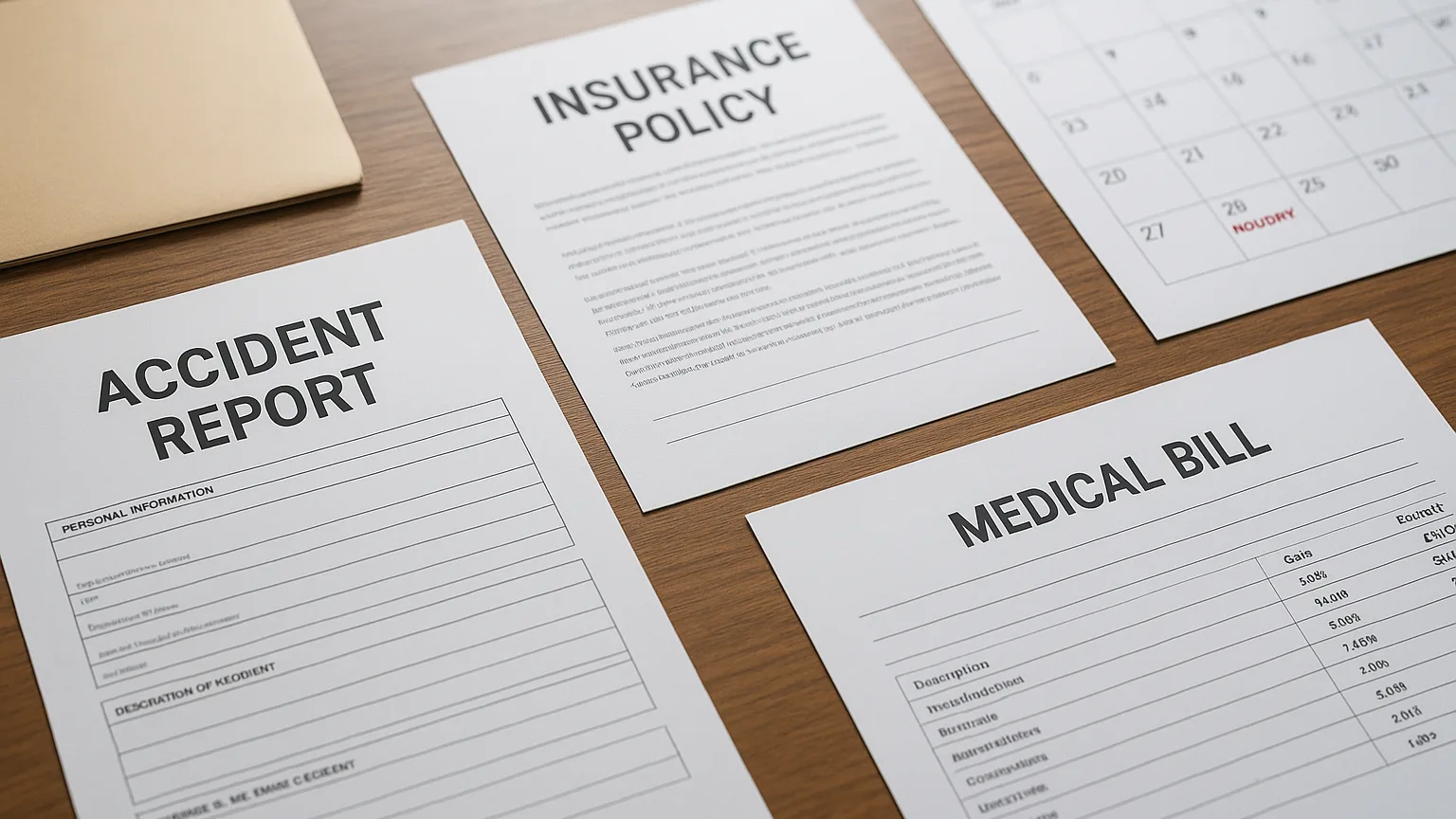
Somewhere in the first packet is a medical release. It usually arrives framed as a way to speed up payment of your bills, and signing it feels like cooperating.
The problem is scope. Broad authorizations frequently grant access to your entire medical history rather than treatment related to this crash. That gives the insurer a decade of records to hunt through for a prior back complaint, an old shoulder injury, or a note about stress, all of which get repackaged as the real cause of your current condition. A limited authorization covering the relevant time period and body parts serves every legitimate purpose. A blanket one serves only theirs.
Early offers show up while the picture is still incomplete, and that timing is deliberate. Nobody yet knows whether the disc herniation will need surgery, whether the shoulder will regain full range, or whether the headaches will still be there in six months. An insurer that resolves the claim now is buying that uncertainty at a discount, and the release you sign closes the file permanently. Colorado does not offer a do over if your condition worsens.
There is also a quieter version of the same move, which is the property damage check with release language buried in it. Settling the damage to your vehicle should never require you to release your bodily injury claim. Read what you are endorsing.
Every Colorado case turns on details that are easy to miss on your own. A short conversation costs nothing and tells you where you actually stand.
Request a Free Consultation
Silence from an adjuster does not mean inactivity. During the weeks when nothing appears to be happening, the file is being built.
Your social media is reviewed, including accounts belonging to family members who tag you. Photographs are collected. Prior claims history is pulled from an industry database that logs every claim you have ever made. Medical records are ordered and read for anything that predates the crash. In cases with real exposure, surveillance is sometimes assigned, which in practice means someone photographing you carrying groceries to the door. A comparative fault percentage is written into the file and a reserve is set, and both of those numbers become harder to move as supervisors sign off on them. Our detailed look at how insurers use social media in Colorado injury claims covers that part in depth.
The good news is that the first month is equally powerful in the other direction, and almost none of it is complicated.
Get evaluated by a physician promptly, even when you think you are only sore. Adrenaline masks a great deal, and soft tissue injuries and concussions frequently announce themselves on day three rather than day one. Follow the treatment plan without unexplained gaps, because a gap in a chart is read as a gap in injury. Photograph everything while it still exists, meaning the vehicles, the scene, the roadway, and your visible injuries as they change. Keep a plain notebook of what you could not do each week, since that record is worth more at valuation time than a memory reconstructed a year later. Preserve evidence that expires on its own, because business security footage often overwrites within days and vehicle crash data disappears when the car goes to salvage.
Colorado gives most motor vehicle claims three years and most other negligence claims two years. Those are the outer walls. The deadlines that actually bite come much sooner.
The person calling on day two is often a first response or fast track adjuster whose authority tops out at a modest figure. They are not the decision maker on a serious claim, and they are not the person who will eventually evaluate an impairment rating or a surgical recommendation. Files with real exposure get reassigned to a senior adjuster, and sometimes to defense counsel. Treating that opening conversation as the negotiation is a mistake, because it is closer to intake. What you say there follows the file to everyone who touches it afterward, which is exactly why it deserves more care than its casual tone suggests.
Nothing here calls for hostility. Adjusters are people doing a job, most of them are decent at it, and antagonizing the person who processes your file helps no one. The distinction worth holding onto is between being cooperative and being unguarded. You can be entirely pleasant while declining a recorded statement, narrowing a medical authorization, and refusing to guess at a speed you did not measure.
The imbalance in that first phone call is not about intelligence or character. It is that one person has handled six thousand of these conversations and the other is having the worst month of their life. Evening that out is most of what a lawyer does early in a case, and it costs nothing to ask. If an adjuster has already called, or a packet is sitting on your counter waiting for a signature, the attorneys at Personal Injury Law Firm of Colorado will tell you plainly what it means. Reach our Denver office for a free consultation, or start with the questions injured Coloradans ask us most.
Written and reviewed by the trial attorneys at Personal Injury Law Firm of Colorado, 1099 18th St # 2400, Denver, CO 80202. Our team has spent more than two decades litigating injury claims in Colorado state and federal courts. This article is general information about Colorado law, not legal advice about your specific claim.
Evidence disappears, witnesses move, and deadlines pass quietly. Tell us what happened and we will tell you honestly whether you have a claim worth pursuing.